


Global coffee prices have risen sharply over the last two years as growers deal with diminished yields and supply chain challenges. This phenomenon has been well covered, and in fact, this is not the first time SPINS has highlighted rising coffee prices, as this category was featured in our 2026 Trend Predictions publication earlier this year. Today, we plan on covering the most up-to-date pricing trends and how consumers have responded to higher prices in a category that many say they cannot live without.
Market Pricing
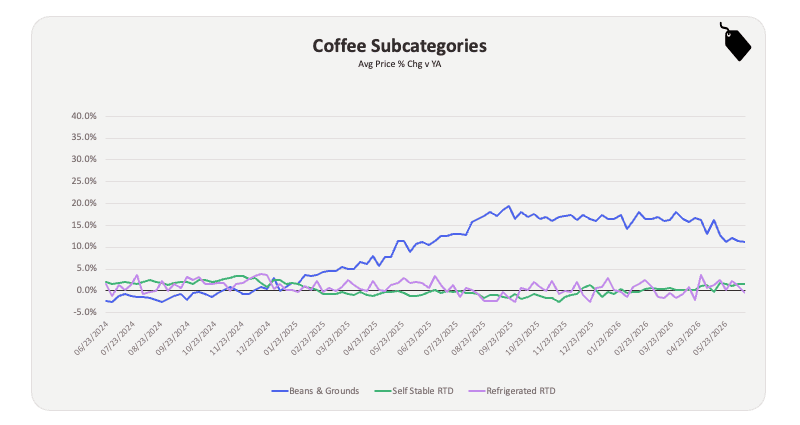
The average price of ground and whole coffee beans started rising in early 2025, hitting its peak (+19% v YA) in September (see Exhibit 1). Throughout the end of 2025 and early 2026, prices remained elevated vs the prior year, hovering around 16% before slightly decelerating to +11% vYA in May 2026. While consumers may welcome a slight pullback in the rate of price increases, these multi-year increases leave coffee prices 23% higher than they were two years ago. Compare these trends with what we see in Shelf Stable and Refrigerated Ready-to-Drink Coffee, where prices are effectively flat over the same period that Ground and Whole Bean coffee have risen by double digits.
Exhibit 1:
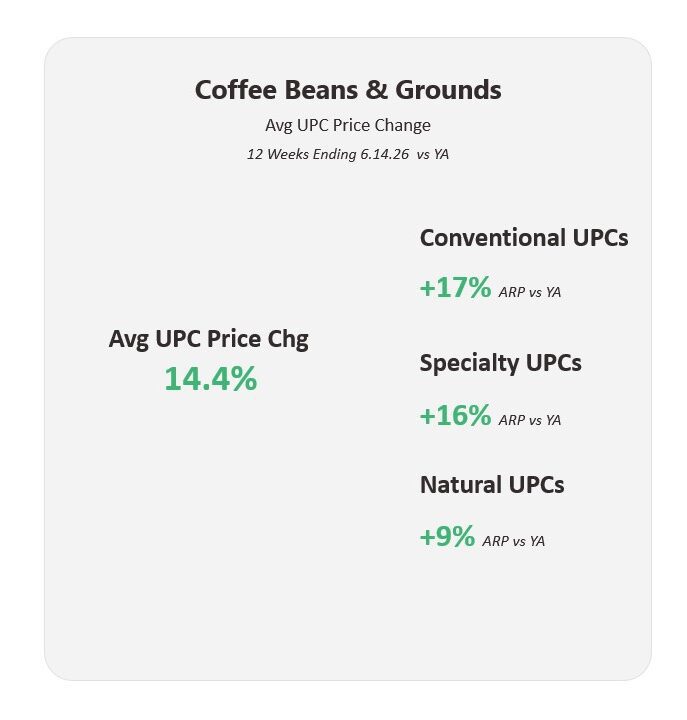
While many categories have become more premium over the years, raising the average price of a category through a more premium product mix, in coffee, we see a clear commodity-driven pricing phenomenon as the majority of products (81%) have raised price over the last year (see Exhibit 2). This is true across the category as conventionally positioned products (+17% ARP), specialty positioned products (+16% ARP), and naturally positioned products (+9% ARP) raised prices (see Exhibit 3). This is a similar phenomenon to what we saw in the early 2020s, with conventional brands responding to pricing pressure with larger price increases than their naturally positioned counterparts.
Exhibit 2:
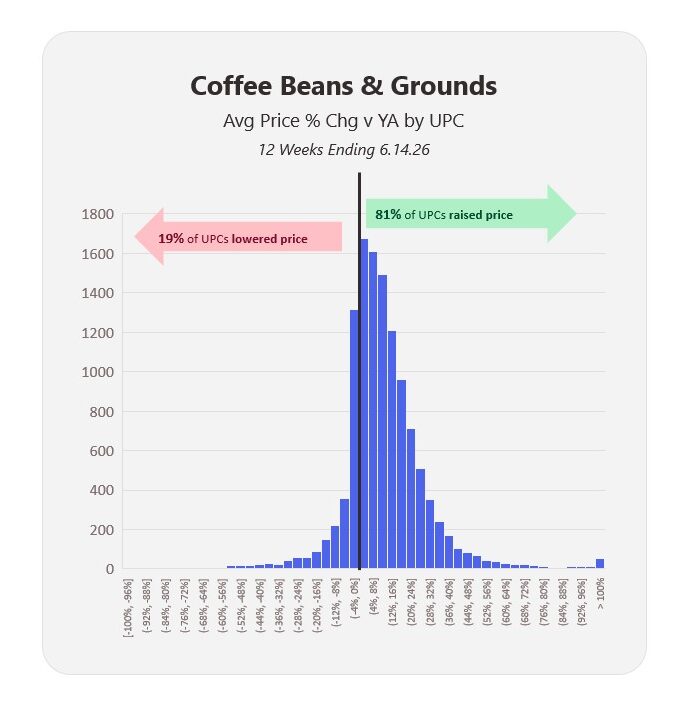
Exhibit 3:
Demand Impact & Consumer Shifts
Demand for coffee declined as prices rose, with unit sales down by 3.8% and equivalized volume (ounces) down by 5.1% (see Exhibit 4). This is not just a case of consumers rationalizing the amount of coffee they purchase, as some consumers choose to leave the category entirely, with household penetration declining by 0.7pts during the latest 12 weeks.
Exhibit 4:
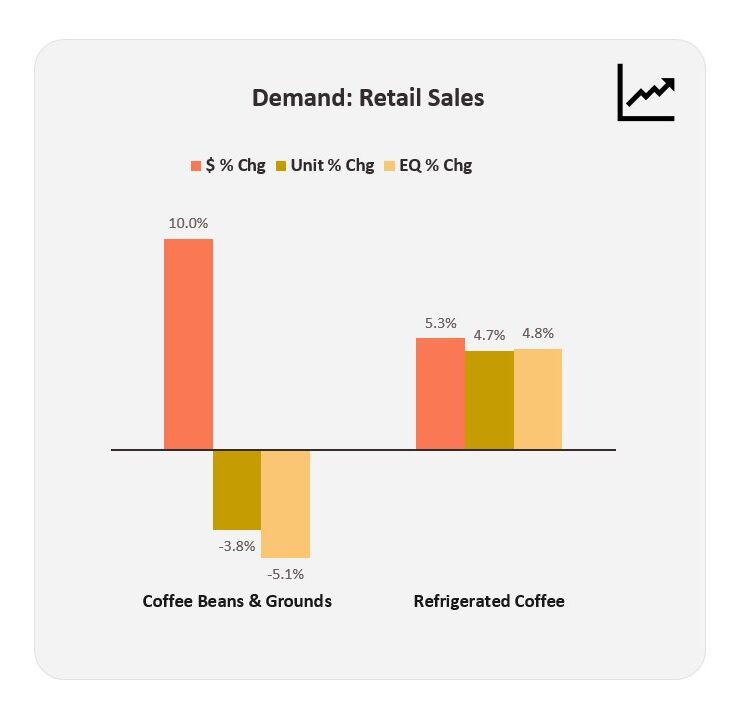
While ground and whole bean coffee units have declined, sales for certain substitutable categories have increased. Refrigerated ready-to-drink coffee unit sales grew by 4.7% while prices stayed relatively flat (see Exhibit 4). In fact, across total beverage, products containing caffeine grew 0.6 share points over the latest 52 weeks compared to products without caffeine. Consumers may be unwilling to give up caffeine, instead shifting to other categories in response to the multi-year price increases of ground and whole bean coffee
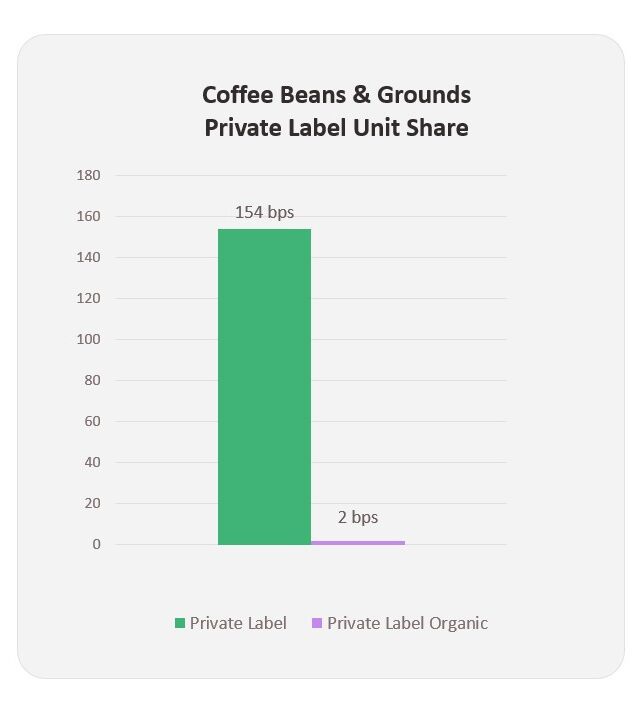
For those consumers unwilling to change their in-home coffee routine, some opted to switch brands in response to rising prices. Conventional positioned brands gained share (17 bps) vs natural positioned brands (-34 bps), which tend to be at a higher price (see Exhibit 5). Even as conventional positioned products raised prices at a faster rate than naturally positioned products (see Exhibit 2), some consumers may still trade down from the most premium products to ones that are at a relatively more mainstream price. Likewise, private label ground and whole bean coffee has gained 154 bps of share (see Exhibit 6), further demonstrating that consumers are willing to change their buying habits in response to higher prices.
Exhibit 5:
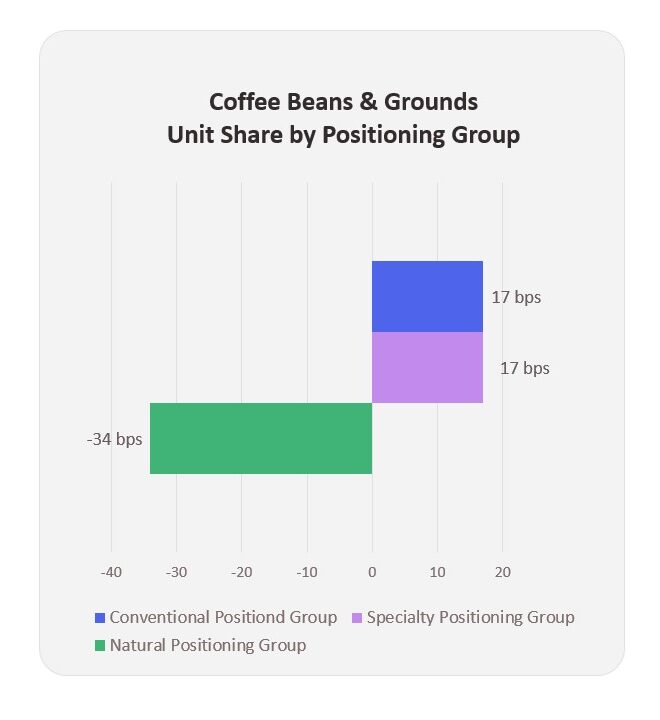
Exhibit 6:
Conclusion
Over the last two years, coffee behaved like a typical commodity category, with cost pressures flowing through to consumers across most products in the category and sustaining for more than a year. Unlike other categories we’ve covered, shoppers are responding by trading down or sometimes trading out of the category to other substitutable beverages. This dynamic (if commodity costs ever come down) may lead to a situation where brands look to aggressively promote and win back consumers once their P&L becomes more favorable. We may also see retailers seek to maintain their momentum and expand their private-label offerings to keep shoppers from leaving the category. Either way, expect price to be a major driver of coffee sales in the coming year, just as it has been over the past two years.
Downloadable Chart Pack
Access the individual slides shown in this post — formatted and ready to use in your own presentations.