


Rising beef prices have become an increasingly visible part of the grocery landscape over the past two years. Like many of the categories we have highlighted in this series, Beef faces inflationary pressure from both long-term structural factors such as herd sizes and meat packer capacity, as well as short-term shocks from parasitic infections impacting cattle health and availability. Today, we plan on covering the most up-to-date pricing trends in beef and how consumers have responded to higher prices in one of the most important center-of-plate categories.
Market Pricing
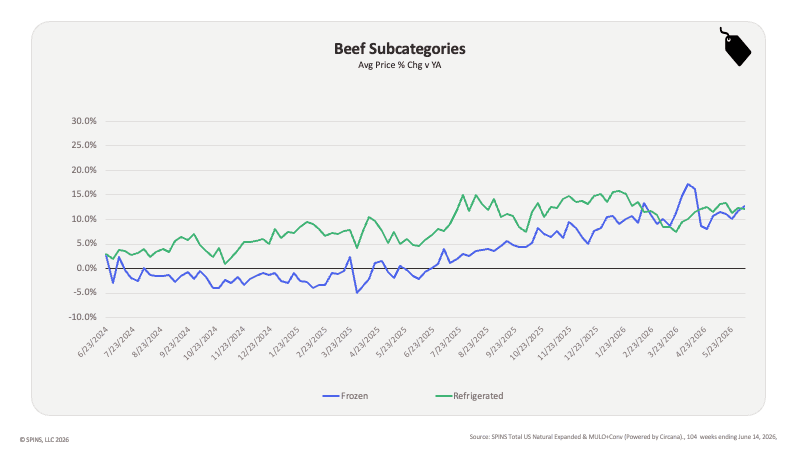
Beef prices have steadily increased over the last two years across both refrigerated and frozen formats. Refrigerated beef has experienced sustained price growth throughout the period, while frozen beef moved from relatively flat pricing in 2024 to double-digit increases by 2026. As a result, both segments are now experiencing elevated prices compared to year-ago levels (see Exhibit 1).
Exhibit 1:
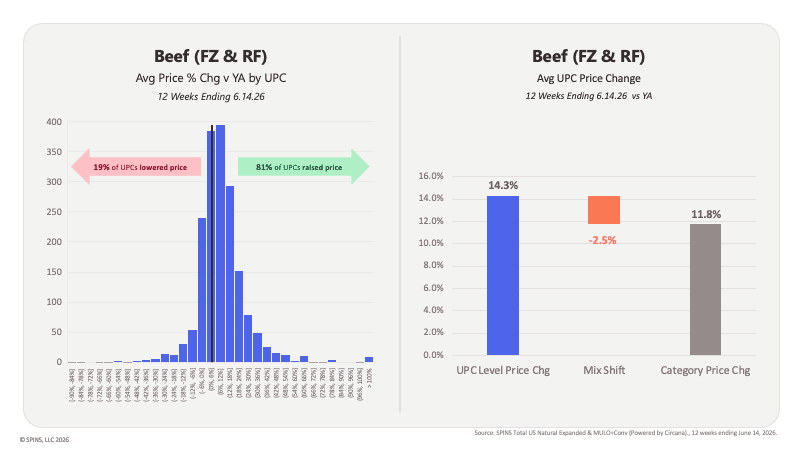
While many categories become more expensive because consumers increasingly buy premium products, beef shows more traditional commodity-driven inflation. Over the latest 12 weeks, 81% of beef UPCs raised price compared to only 19% that lowered price (see Exhibit 2). Average UPC-level pricing increased by 14.3%, while product mix reduced pricing by 2.5%, resulting in a net category price increase of 11.8%. Category inflation is being driven primarily by widespread price increases rather than consumers shifting toward more expensive products.
Exhibit 2:
Demand Impact & Consumer Shifts
Demand has weakened as prices have climbed. Frozen beef dollar sales increased +6.7%, but unit sales declined -4.7% and equivalized volume declined -4.2%. Refrigerated beef generated stronger dollar sales growth (+12.7%) and slightly positive unit growth (+0.8%), yet equivalized volume still declined by 3.7% (see Exhibit 3). These results indicate that higher prices continue to support sales growth, even as consumers purchase less beef volume overall.
Exhibit 3: 
Consumer participation trends reinforce this story. Household penetration declined by 0.8 points in frozen beef and 0.9 points in refrigerated beef, indicating that some households are reducing purchases or leaving the category entirely (see Exhibit 4). Higher prices are contributing to both lower consumption and lower household participation. Some consumers may be shifting to other protein types, as household penetration for frozen and refrigerated chicken has increased by 0.6 pts and 2.2 pts, respectively.
Exhibit 4: 
For consumers who remain active in the category, purchasing behavior is changing in notable ways. Natural and specialty positioned beef gained 282 basis points of equivalized share while conventionally positioned products lost an equal amount (see Exhibit 5). At the same time, traditional private label beef lost 396 basis points of equivalized share while private label organic gained 179 basis points. Rather than broadly trading down into lower-priced options, remaining beef shoppers appear to be concentrating their purchases within products that align with premium, natural, or organic credentials.
Exhibit 5:
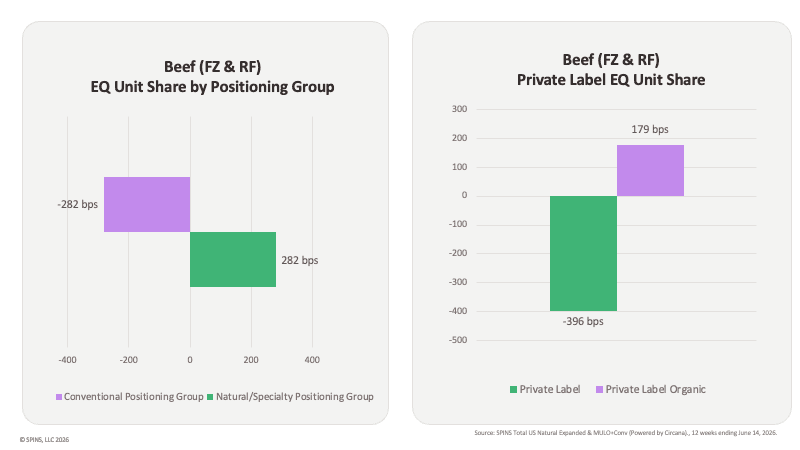
In beef, the consumers who remain engaged in the category appear more willing to prioritize quality attributes, even while overall category demand softens. Some value-oriented households are reducing participation altogether, while the remaining buyers continue to allocate spending toward products that align with their preferences for natural and organic offerings.
Conclusion
Over the last two years, beef has behaved like a classic commodity-inflation category, with cost pressures flowing through to consumers across the majority of products in the category rather than being isolated to a handful of brands or premium segments. Prices have risen across refrigerated and frozen beef, and those increases have contributed to lower household participation and declining equivalized volume despite continued dollar sales growth.
Looking ahead, price is likely to remain one of the most important drivers of category performance. And unlike other categories we have covered, Beef cost pressures are more structural and less due to short-term shocks or seasonal crop failures. If inflationary pressure persists, brands and retailers may need to balance margin preservation with strategies designed to maintain household participation. How consumers respond, either by reducing consumption and trading into other protein types or staying and accepting higher prices, will determine how manufacturers and retailers decide to pass along their higher costs.
Downloadable Chart Pack
Access the individual slides shown in this post — formatted and ready to use in your own presentations.